

What a Typical Day Looks Like on a South Dakota Archery Rut Hunt
Overview
A typical day on a South Dakota whitetail hunt with Charge Adventures follows a structured but flexible routine built around early morning movement, guided transportation, and full-day hunting opportunities during the peak of the November rut. While stand locations, wind direction, and deer activity will change from day to day, the overall schedule remains consistent, so hunters always know exactly how each day will unfold from start to finish. The goal is to keep the focus on hunting time in the field while all logistics, transportation, and stand placement are handled by our team.
These hunts take place near Newell, South Dakota, just outside the Black Hills region, on private land where whitetail deer are concentrated through river systems, creek bottoms, and agricultural edges. The entire experience is fully guided, and every part of the day, including meals, transportation, stand placement, and daily coordination, is managed from our lodge. Hunters are not required to scout, navigate, or make independent decisions about where to hunt. Everything is structured around putting hunters in the right locations during the right movement windows.
The purpose of each day is straightforward. We get hunters into position before daylight, keep them in high-probability areas during peak movement, and adjust based on wind, conditions, and deer activity observed across the property system.
Morning Start at the Lodge
Each morning begins early at our private lodge near Newell. Hunters wake up at camp and have breakfast prepared before heading into the field. The lodge serves as the central base of operations for the entire hunt, which removes any need for scouting, map reading, or independent travel decisions.
Once breakfast is finished, our guide team organizes the plan for the day. This includes reviewing wind direction, recent deer movement, and any activity observed in the creek bottoms or river systems. Based on those conditions, hunters are loaded into vehicles and transported directly to their assigned stand locations.
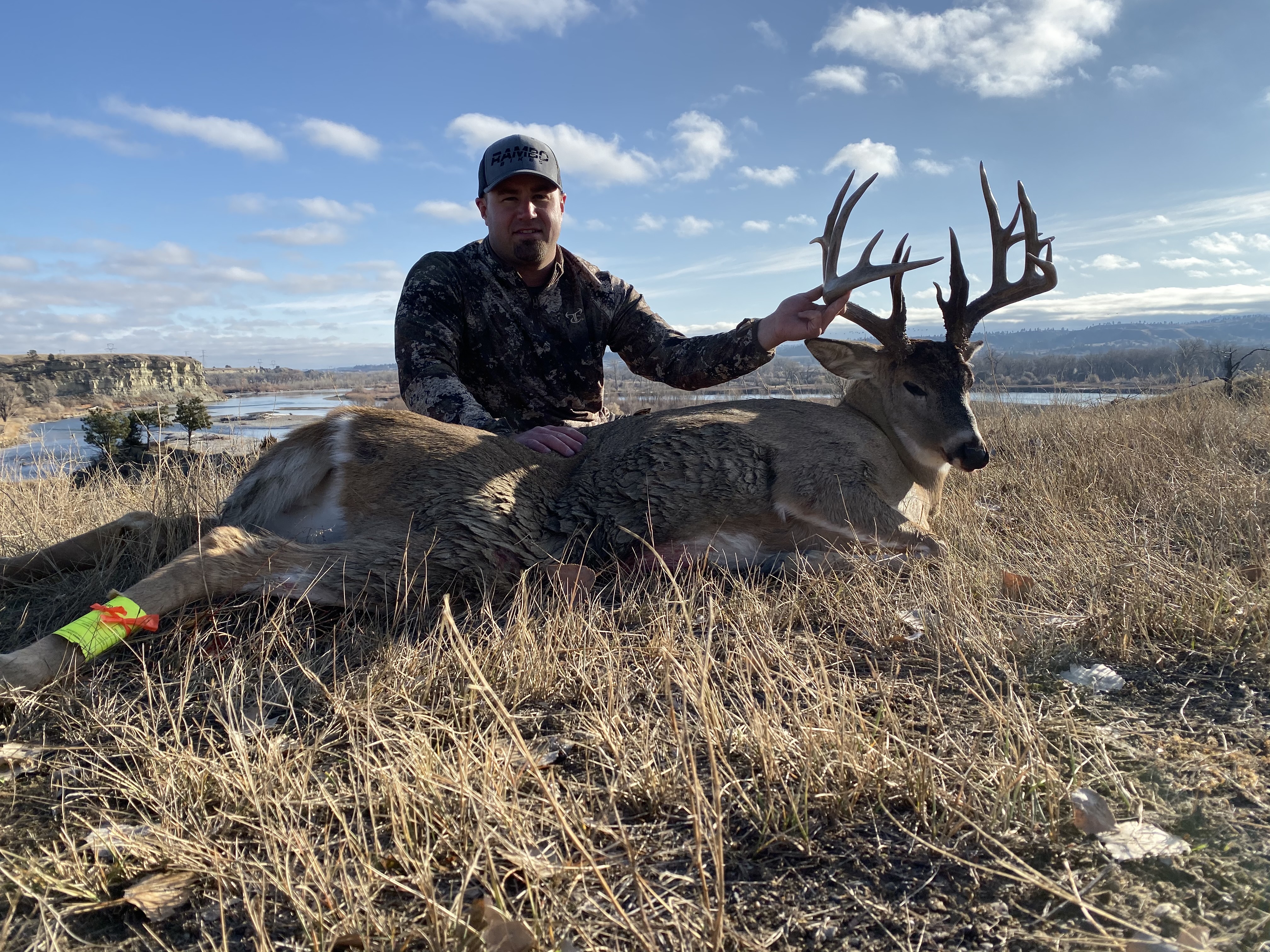
These stand locations are chosen specifically around active deer movement within the Belle Fourche River system and surrounding creek bottoms. Because the terrain is largely open prairie, deer are consistently funneled into these low-lying corridors, which makes stand placement highly dependent on wind and movement patterns.
Hunters are placed into their stands before first light so everything is settled and undisturbed before legal shooting hours begin. Once in position, the area is left to function naturally without pressure or disruption.
Morning Hunt Period
The morning hunt begins at first light and runs through the primary early movement window. During early November, which is the peak rut period in this region, deer activity can begin before sunrise and continue through mid-morning depending on conditions such as temperature, wind, and cloud cover.
Most stand setups are located along creek bottoms, river systems, and agricultural edges where deer naturally travel between bedding and feeding areas. The Belle Fourche River and surrounding drainages serve as primary movement corridors that consistently hold deer during this time of year.
Because of the open prairie environment, deer are not randomly dispersed across the landscape. Instead, they are concentrated into these defined systems where cover exists. This creates predictable movement routes that allow us to position hunters in locations with repeatable travel patterns rather than isolated encounters.
During the morning period, hunters remain in position while our guide team monitors conditions across the property system. Any changes in wind or movement are tracked closely to help guide adjustments for later in the day or the following hunt.
Midday Strategy and Flexibility
As morning movement slows, the hunt transitions into the midday portion of the day. At this point, hunters operate under one of two structured options depending on conditions and personal preference.
The first option is to remain in the stand for the entire day. During the rut, this is often the most effective approach because deer movement does not follow strict morning and evening windows. Bucks are actively searching for does throughout the day and can move through creek systems at any time, especially during early November.
The second option is a guided pickup from the stand. If a hunter chooses not to stay all day, our guide team returns to retrieve them and transport them back to the lodge for lunch. After lunch, hunters are then taken back into the field for the afternoon hunt.
Lunch is always provided at camp and is part of the daily structure. This system is designed to give hunters flexibility without sacrificing time in high-probability locations during active movement periods.
Afternoon Hunt Period
The afternoon hunt follows the same structure as the morning. Hunters are either already in position for an all-day sit or are transported back into the field after lunch for the second primary hunting window of the day.
Afternoon movement is often tied to deer transitioning between bedding and feeding areas. During the rut, bucks continue to move throughout daylight hours, especially as they search for receptive does within the creek and river systems.
Even though the terrain is wide open prairie, deer remain concentrated in these low-lying systems due to limited cover elsewhere in the landscape. This creates structured travel corridors that allow us to consistently place hunters in areas with active movement potential.
Our guide team remains in communication throughout the afternoon and adjusts stand placement when needed based on wind shifts, pressure changes, and observed deer movement across the property system.
Evening Close and Return to Lodge
At the end of legal shooting light, hunters are picked up from their stand locations and transported back to the lodge. All transportation is handled by our team so hunters do not need to navigate or manage exit routes in the dark.
Once back at camp, the evening becomes a structured reset period. Dinner is prepared at the lodge by our cook and served each night. Meals are home-cooked and consistent throughout the duration of the hunt, providing a reliable routine after long days in the field.
Evenings are also used to review the day’s activity. We go over what was seen, where deer movement occurred, and how conditions are changing across the property system. These discussions are important for refining stand placement and strategy for the following day.
Camp Structure and Daily Routine
The hunt operates out of a small private lodge near Newell. Camp size is intentionally limited, typically around four hunters with a maximum of six. This allows us to maintain a controlled environment and manage hunting pressure across the property system more effectively.
We operate on a two-hunters-per-guide structure. Each guide is responsible for transportation, stand placement, and daily adjustments based on wind direction and deer activity.
A dedicated cook is also part of camp, providing breakfast, lunch, and dinner each day. This ensures hunters are fully supported and can focus entirely on hunting rather than logistics or preparation.
Every day follows the same rhythm: early breakfast at the lodge, morning transport to stands, guided hunting through the morning, optional midday pickup or all-day sit, afternoon hunting period, and evening return to camp.
Weather and Field Conditions
The weather in South Dakota during November can vary significantly. Conditions may range from mild fall temperatures to cold fronts bringing freezing temperatures and strong winds. These shifts can occur quickly and directly impact deer movement and stand placement decisions.
Wind is a constant factor in this region due to the open prairie terrain. Because of this, stand selection is adjusted daily based on wind direction to ensure proper positioning within creek bottoms and travel corridors.
Hunters should be prepared for long sits in changing conditions, including cold mornings, shifting temperatures, and potential precipitation. Proper layering is essential for comfort during extended time in the field.
Summary of a Typical Day
A typical day on this hunt follows a structured but adaptable rhythm. It begins early at the lodge, moves into guided transport and stand placement before daylight, and continues through morning and afternoon hunting periods focused on creek bottom and river system travel corridors.
Hunters have the option to remain in the field all day or return to camp for lunch, depending on preference and conditions. Regardless of approach, the focus remains on keeping hunters positioned in high-probability areas during active movement windows.
Each evening ends back at the lodge with dinner, discussion of the day’s activity, and preparation for the following morning. This cycle repeats throughout the four-day hunt and keeps the entire experience centered around hunting time rather than logistics.