

What You Should Expect for Whitetail Deer Quality in South Dakota
Overview
When hunters ask about our South Dakota whitetail hunt, deer quality is usually one of the first things they want to understand. We answer that question directly because this hunt is best understood with clear expectations. Our hunting area is near Newell, South Dakota, just outside the Black Hills region, and the deer are part of a natural private land system shaped by open prairie, creek bottoms, river corridors, agricultural ground, weather, and rut movement.
This is not the hunt we would recommend to someone who is only interested in chasing a 180, 190, or 200-inch whitetail. If that is the goal, there are other places in the Midwest better suited for that specific kind of hunt. What we offer in this area is a strong opportunity at a good, representative South Dakota whitetail, with the most common mature buck class falling in the 130 to 150 inch range.
The value of this hunt is in the combination of deer numbers, private land access, rut timing, guide placement, and the way deer use the landscape in this part of South Dakota. When those factors come together in early November, hunters can expect a real opportunity at mature whitetails in a setting that is very different from heavier timber states.
The Core Deer Class We Hunt
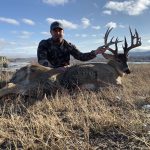
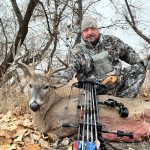
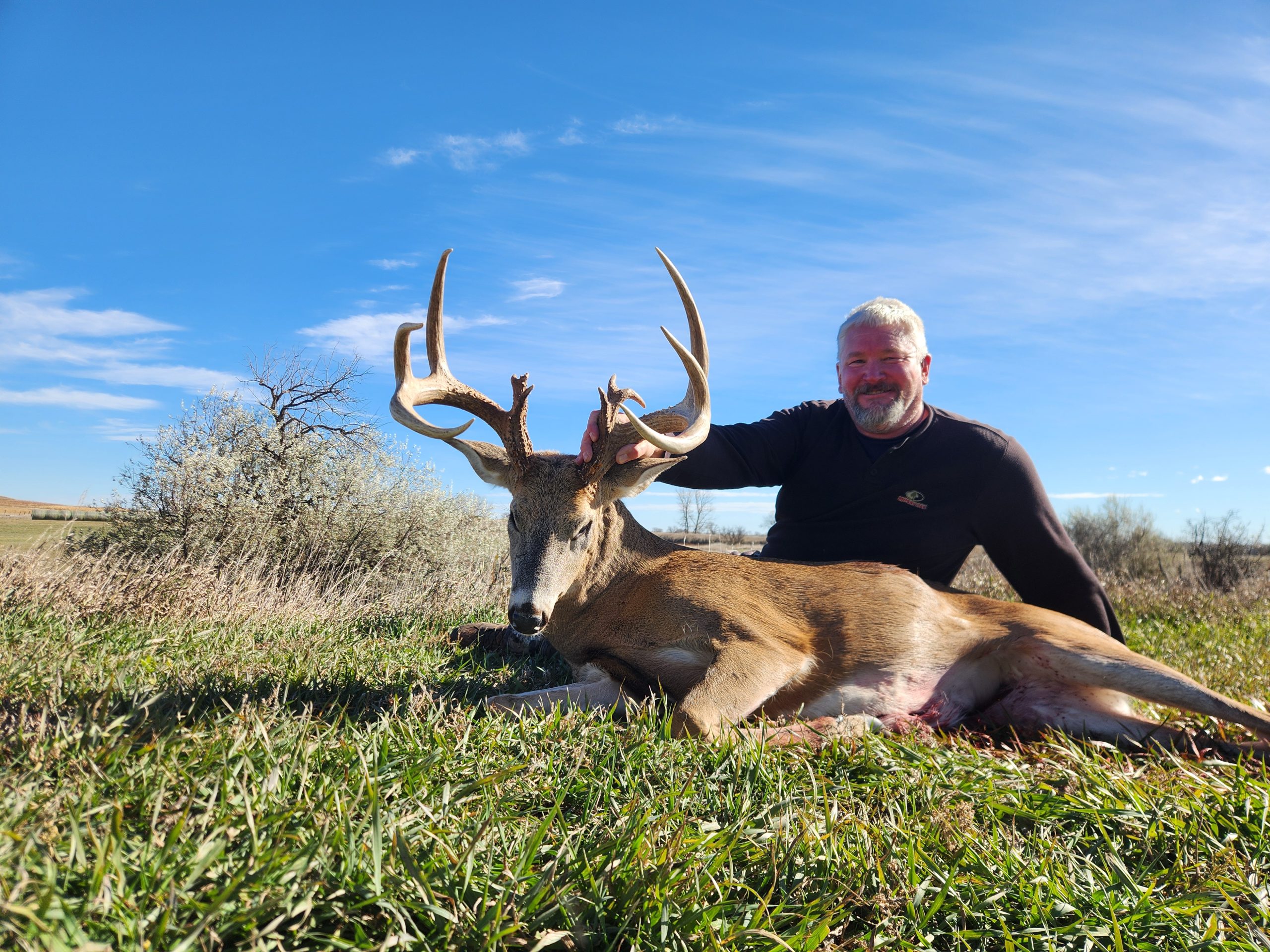
The most realistic expectation for this hunt is a mature whitetail in the 130 to 150 inch range. That is the deer class we focus on, and it is the class hunters should have in mind when deciding if this hunt is the right fit.
These are good, respectable whitetails. They are not young deer, and they are not deer we would consider marginal for this area. They represent the quality of bucks our region consistently produces and the type of deer we are trying to put hunters in a position to encounter during a four-day archery hunt.
There are times when deer push beyond that range. We do see bucks that reach into the 150s, and every once in a while, a 160 or 170-class deer shows up in the area. Those deer are possible, but they are not common enough to build expectations around. We would rather be honest about that before a hunter arrives than create the wrong impression of what this hunt is designed to be.
Our approach is to keep expectations grounded. A hunter who comes into this hunt looking for a mature 130 to 150 class whitetail during the rut is evaluating the opportunity correctly.
Why We Talk About Opportunity Instead of Guarantees
We do not like leaning too hard on the word success, because success depends on more than deer being present. We can control land access, guide effort, stand placement, transportation, meals, lodging, and how we manage the hunt each day. We cannot control the weather, shot execution, how a specific buck responds to rut activity, or every movement decision deer make over a four-day window.
That is why we prefer to talk about opportunity. On this hunt, our goal is to provide hunters with a strong shooting opportunity on a mature whitetail. The structure of the hunt is built around that goal. We keep camp small, operate with a two-hunters-per-guide setup, transport hunters to stand locations, and adjust based on wind and daily activity.
The difference matters. A guarantee can create the wrong kind of expectation. Opportunity is a more accurate way to describe a free-ranging hunt where the deer, terrain, and conditions are real. Hunters still need to be ready when the moment comes, but our job is to put them where that moment has the best chance to happen.
How the South Dakota Terrain Affects Deer Quality
The terrain around Newell is open western South Dakota country. Much of the surrounding landscape is prairie, with deer activity tied closely to creek bottoms, river systems, and agricultural edges. The Belle Fourche River runs through the area, along with other drainages that provide cover and travel structure.
This matters because deer in this part of the state do not live in endless timber. Cover is more limited, and that concentrates movement into the places where deer feel secure. Creek bottoms and river corridors become the areas where whitetails bed, travel, and move between feeding areas.
That landscape does not create the same kind of deer expectations as certain intensively managed Midwest regions. It creates a different kind of hunt. Deer movement is shaped by available cover, open terrain, and natural travel routes. The bucks that live here are part of that environment, and the deer quality reflects the conditions of the region.
For hunters, this means the hunt is less about guessing across endless cover and more about understanding where deer have to be. That is one of the reasons the area can provide a consistent opportunity during the rut.
What Rut Timing Adds to the Hunt
The remaining archery dates are in early November, which is prime rut timing for this hunt. That timing is important because it changes deer movement. Bucks that may be more cautious or patterned earlier in the season begin covering more ground as they search for does.
During this window, movement can happen at any point in the day. That is why we often encourage hunters to stay in the stand all day if they are able. A mature buck may not pass through during the first hour of daylight or right before dark. In the rut, he may come through late morning, midday, or early afternoon while moving through a creek bottom or river corridor.
Rut timing does not suddenly turn every deer into a giant. It does not change the overall deer quality in the area. What it does is increase movement, improve visibility, and create more chances for hunters to encounter the mature bucks that are already using the system.
That is why these dates are valuable. The deer are there throughout the season, but early November gives hunters one of the best windows to catch them moving in daylight.
Where Larger Deer Fit Into the Picture
Larger deer are part of the system, but they need to be understood correctly. There are deer in the 160 to 170 inch range in our area. They are not impossible, and they are not something we ignore. If one of those deer is using a property during the rut, we are going to hunt him the right way and put hunters in the best position we can.
At the same time, those deer are few and far between. They are not the standard for the hunt, and they are not the reason we ask hunters to book this trip. The foundation of the hunt is a quality opportunity at a mature whitetail in the 130 to 150 inch range.
That honesty matters. We would rather a hunter arrive with a clear picture of the opportunity than expect a deer class this area does not consistently produce. When hunters understand that, the experience is better from the first morning in the stand to the final evening at the lodge.
What Hunters Should Expect in the Field
Hunters should expect a stand-based archery hunt focused on private land movement corridors. Most whitetail hunting is done from tree stands, with ground blinds used when conditions call for them. Stand locations are chosen around the areas where deer movement is strongest, especially creek bottoms, river systems, and agricultural edges.
During the rut, we recommend being prepared for long sits. We will bring hunters back to camp for lunch if that is what they prefer, but staying in the field all day can be the better choice when deer movement is active. Breakfast is handled before the morning hunt, lunches can be prepared for the field, and dinner is waiting back at the lodge each evening.
The hunt is not physically extreme, but hunters should be ready for changing South Dakota weather and long hours in the stand. November can be mild, or it can be very cold. Dressing in layers and being prepared for wind and cold temperatures makes a real difference in how well someone can stay focused during an all-day sit.
A Realistic Way to Evaluate This Hunt
The right way to evaluate this hunt is to look at the full picture. We are offering a four-day, fully guided archery whitetail hunt during prime rut timing, on private land near Newell, South Dakota, with lodging, meals, transportation to stands, and field care included.
The expected deer class is mature whitetails in the 130 to 150 inch range, with occasional larger deer in the area. The tags are over the counter for private land archery deer, which keeps planning straightforward. Camp is small, the guide ratio is two hunters per guide, and the hunting is focused on the terrain features deer rely on most.
For a hunter looking for a realistic South Dakota rut hunt with strong opportunity, clear expectations, and a well-organized camp, this is the kind of experience we built this hunt to provide.