

The Nebraska Hunt Beyond the Blind
Overview
A waterfowl trip is easy to judge by what happens when the birds are working. Those are the moments everybody remembers: a group finishing over the decoys, a field coming alive at first light, or a late-season mallard finally committing after circling longer than anyone wanted. But a three-day waterfowl hunt is made up of a lot more than the minutes when somebody is reaching for the safety.
That is especially true on our Nebraska hunt. The hunting is obviously the reason everyone is there, but the trip was built around the entire experience surrounding those hunting hours. There is a private lodge near the hunting areas, meals are handled, transportation to and from the field is taken care of, and the daily schedule can change according to what the birds are doing.
For a hunter traveling several states to spend three days chasing ducks and geese, those details matter. They affect how much of the trip is spent hunting, how much time is lost dealing with logistics, and whether you can simply concentrate on the reason you came to Nebraska in the first place.
A Waterfowl Trip Has a Lot of Hours Outside the Blind
When people compare guided waterfowl hunts, most of the attention naturally goes toward the hunting itself. Where are the birds? What species are available? Are you hunting fields or water? What does the property look like? Those are the right questions, but they are not the only ones that determine whether the trip is actually enjoyable.
On a multi-day hunt, you are also spending mornings getting ready, time traveling between camp and hunting areas, afternoons waiting on the next move, evenings eating and talking through the day, and nights preparing to do it again. A three-day hunt can feel very different depending on how those hours are organized, which is why we wanted the Nebraska setup to stay simple.
Hunters stay at a private, fully furnished lodge located near the hunting areas. Meals are included throughout the trip, with breakfast before hunts, lunch worked around the hunting schedule, and dinner after returning to camp. Transportation from camp to the designated hunting areas is also handled by Charge Adventures.
None of those things will make ducks finish, but they do remove a lot of the distractions that can make a traveling waterfowl hunt more complicated than it needs to be.
The Lodge Is Part of the Hunt, Not the Attraction
We are careful about how we describe the lodge because this is still a hunting trip. Nobody is coming to Nebraska because they are looking for a resort. The lodge is there to give hunters a comfortable place to stay, eat, spend time with the group, and get ready for the next hunt, and that is exactly what we want it to do.
The distinction matters because accommodations can become a marketing distraction if an outfitter spends more time selling the lodge than explaining the hunting. At the same time, lodging becomes very important after a long day in December or January. If a group is hunting hard for three days, having camp close to the hunting area and not having to figure out lodging every night makes the trip considerably easier.
There is also something to be said for keeping the group together. Part of any good hunting trip happens after everyone is back at camp, when somebody is getting reminded about the bird they missed, the guide is talking through what changed during the afternoon, or the group is already wondering what the next morning might look like. The lodge gives that part of the trip a home base without trying to become the reason for the trip.
A Flexible Hunting Schedule Changes the Rest of the Day
One thing that separates this hunt from a rigid morning-blind operation is that we are not forcing every hunting day into the same schedule. Depending on bird activity and current conditions, the hunting effort can take place in the morning, afternoon, or across a full day. The guides choose the setup according to weather, bird activity, and field conditions.
That flexibility affects what happens back at camp too. If the best opportunity is expected later in the day, there is no reason to burn everyone out simply because waterfowl hunters are accustomed to setting alarms early. If the birds are moving first thing, the day can start accordingly. If conditions justify staying after it most of the day, the schedule can adjust around that as well.
The meals and lodging are built around the hunt rather than the other way around. That sounds like a small detail, but it becomes important on a trip where the birds and weather are setting the schedule.
You Are Not Spending the Trip Driving Around Nebraska
Travel is another part of a guided hunt that does not get much attention until it becomes a problem. The Nebraska trip includes round-trip transportation from camp to the designated hunting areas, so once hunters arrive at the lodge, the goal is to remove as much unnecessary transportation planning as possible from the next three days.
That is valuable for more than convenience. The guide team is already making decisions about where the group should be hunting, so there is no benefit in adding another layer where visiting hunters are trying to navigate unfamiliar roads, determine where they are supposed to meet, or coordinate multiple vehicles every time the plan changes.
That becomes especially useful on a trip where the hunting can involve open agricultural ground, local waterways, wetlands, marshes, backwaters, and other habitat depending on current conditions. The hunter does not need to know where tomorrow’s setup is before coming to Nebraska. That is part of what the guide team is there to figure out.
Three Days Gives the Trip Time to Develop
One of the reasons we like the three-day format is that a waterfowl trip can develop over time. A single morning gives you one snapshot, while three days gives you a better opportunity to experience the country under different conditions and, potentially, different hunting situations.
A change in weather can alter bird movement. A field that was being used one day may not be the best play the next. Water conditions can change, and the guide team also has more information after watching what happens during the first day. That does not mean the second or third day automatically becomes better, because hunting does not work that way, but it does mean the trip is not defined by one setup.
That distinction matters when somebody is traveling a significant distance to hunt. We wanted Nebraska to feel like an actual hunting trip rather than a morning reservation attached to a hotel room. Hunters arrive, settle into camp, spend three days hunting the area, eat together, stay together, and then head home with enough time in the field for the trip to develop into something more memorable.
The People You Travel With Matter Too
A lot of waterfowl hunters eventually reach the point where the trip itself becomes almost as important as adding another bird to the total. That does not mean the hunting becomes secondary or that anyone wants to spend money traveling to stare at empty skies. It means the reasons we continue making hunting trips tend to become broader over time.
Some of the memories that last the longest have very little to do with the final count. They are the drive into a new piece of country, the conversations before daylight, watching a friend completely miss something they will swear was farther away than it actually was, or sitting down for dinner after everybody has been outside all day.
Waterfowl hunting lends itself particularly well to that kind of trip because it is naturally social. There is time in the blind, time between flights, and usually no shortage of opinions about calling, shooting, decoy placement, dogs, weather, and what somebody should have done differently. A three-day lodge-based hunt gives a group enough time to enjoy that side of the sport instead of rushing in for one morning and leaving.
The Hunting Still Has to Carry the Trip
None of this works if the hunting side is treated as an afterthought. The reason the lodge, meals, transportation, and three-day structure matter is because they support the actual waterfowl hunt.
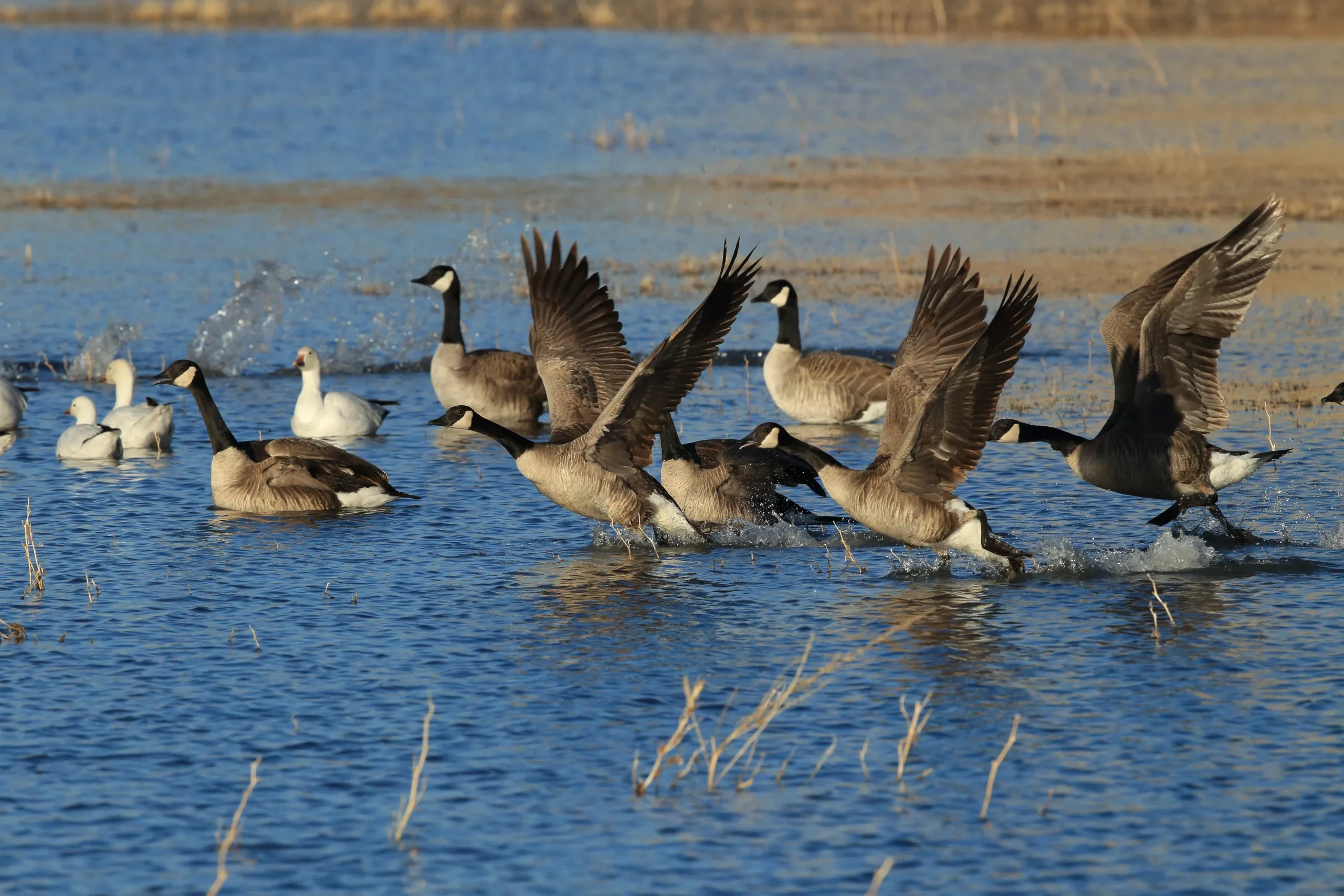
The Nebraska property is managed specifically for waterfowl hunting. Portions of water can be kept open during cold conditions with ice eaters, and the larger area is influenced by the Platte River system. Depending on bird movement and conditions, the hunting can involve fields, waterways, wetlands, marshes, and backwaters rather than being tied to one permanent setup.
That is the foundation of the trip. Everything else is there to make it easier for hunters to experience it without spending half of the hunt worrying about where to eat, where to meet the guide, how to get to the next setup, or what the plan is for tomorrow. Those are parts of the trip Charge Adventures can handle so the hunter can focus on hunting.
What You Are Actually Booking
The Nebraska waterfowl trip is $2,650 per person and includes three days of fully guided hunting, lodging, meals, professional guides, private-land access, and transportation between camp and the designated hunting areas.
That price is obviously connected to the hunting opportunity, but it is also paying for the structure around it. The private lodge is handled, meals are handled, the guide team is making the daily hunting decisions, access is arranged, and transportation during the hunt is taken care of. The schedule can move with the birds rather than requiring the hunters to coordinate everything themselves.
For somebody who already spends plenty of time organizing their own waterfowl season at home, that can be one of the better parts of traveling for a guided hunt. You get to spend those three days participating in the trip instead of managing every detail of it.
Beyond the Blind
We talk a lot about the Platte River, late-season mallards, Canada geese, weather, open water, and the different ways the Nebraska hunt can develop because those things are central to the opportunity. They are not, however, the entire trip.
A good waterfowl hunt should still feel like a hunting trip from the time you arrive at camp until the time you leave. The lodge should be comfortable, the meals should fit around the hunting, the guides should have the freedom to change the plan when conditions change, and transportation should not become another problem for the hunter to solve. When everyone gets back to the lodge after the hunt, there should also be time to enjoy being there.
That is what we wanted to build in Nebraska. The birds will ultimately determine what happens in the blind, and we cannot control that part of waterfowl hunting. What Charge Adventures can control is everything surrounding those moments, and when those pieces are handled correctly, the hunt becomes more than a few hours under a spread of decoys. It becomes a trip worth taking.